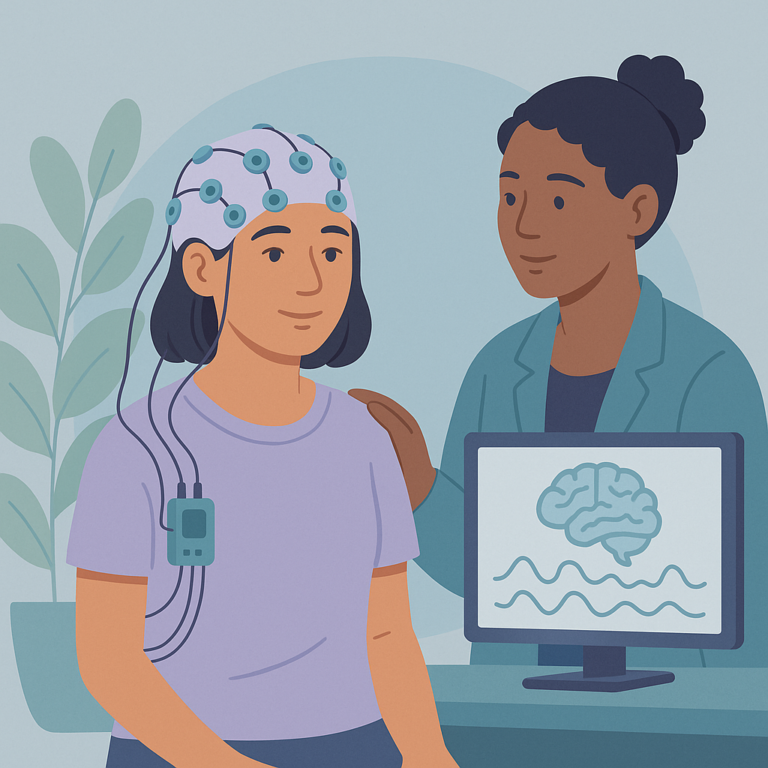
New Device Safely Records Brain Activity for Epilepsy Care
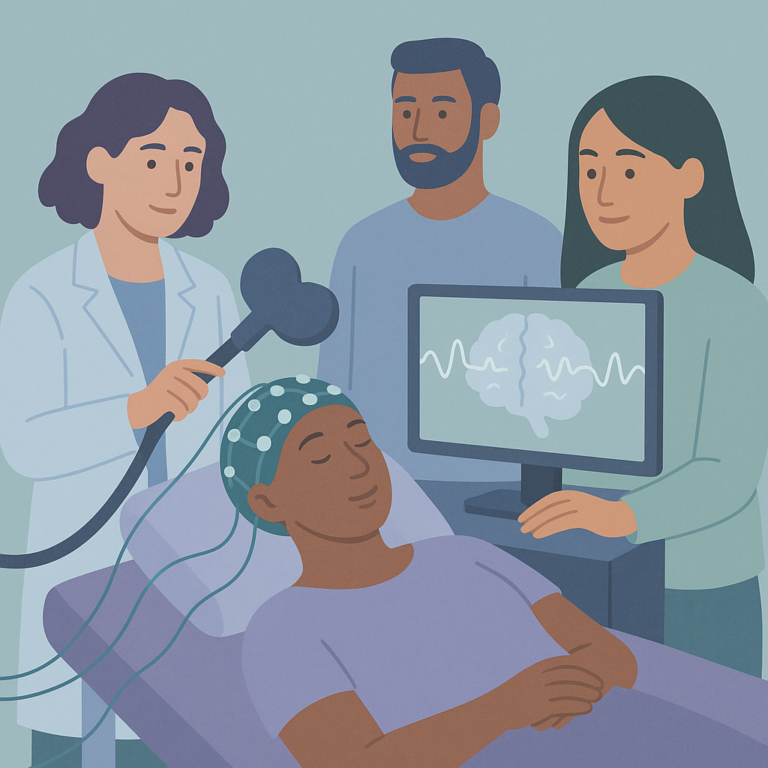
Researchers studied a new device called the EP-01, which is designed to record brain activity from inside blood vessels in patients with drug-resistant epilepsy.

This study looked at a rare genetic disorder called neuronal ceroid lipofuscinosis type 2 (CLN2 disease) in children in France.
A recent study looked at how well the updated International League Against Epilepsy (ILAE) seizure classification works in secondary referral centers, which are specialized clinics for epilepsy care.
This study looked at how well cenobamate, a medication for epilepsy, works in adults with intellectual disability (ID) compared to those without ID.
This study looked at how being exposed to antiseizure medications (ASMs) before birth affects children’s cognitive development from ages 2 to 6.
Researchers studied different non-invasive neurostimulation treatments for people with drug-resistant epilepsy, which is a type of epilepsy that does not respond well to medications.
Researchers studied brain activity patterns in children with a specific type of epilepsy called self-limited epilepsy with centrotemporal spikes (SeLECTS).
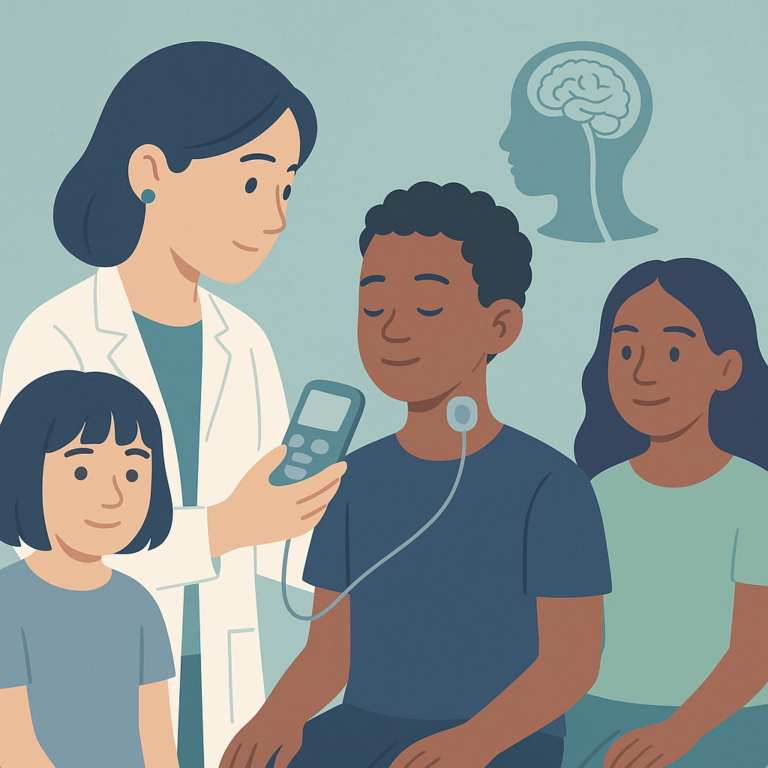
This study looked at the use of vagus nerve stimulation (VNS) to treat children with drug-resistant epilepsy, meaning their seizures did not respond to standard medications.
This study focused on understanding how common infantile epileptic spasms syndrome (IESS) is in India.